






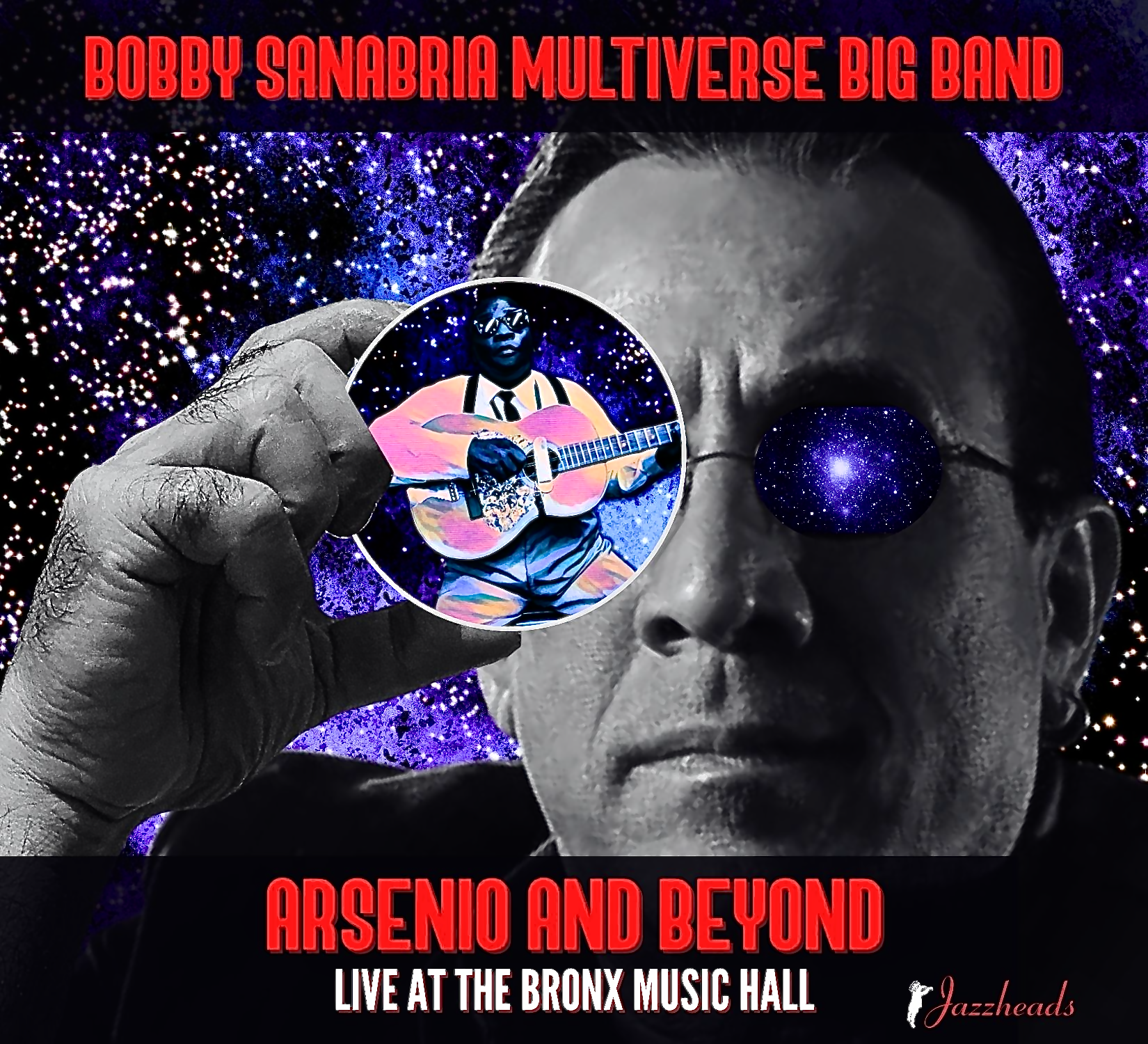
“The true Father of Mambo and Son Montuno, without Arsenio Rodriguez there is no salsa, Afro-Cuban jazz, and many would even argue, rock and funk. Although his music is timeless, I’ve always envisioned it being interpreted in a big band setting with modern, progressive jazz-oriented arrangements. That vision has now finally become a reality in the recording you are holding in your hands. That it was done in front of a live audience with my incredible Multiverse Big Band in the mighty South Bronx where Arsenio once lived, in the new Bronx Music Hall where I am the co-Artistic Director with Elena Martinez right near where I grew up makes it even more special. Qué viva Arsenio! Bobby Sanabria
THE MAN:
ARSENIO RODRIGUEZ (b. Ignacio Arsenio Travieso Scull in Matanzas, Cuba, August 31, 1911 – d. in Los Angeles on December 31, 1970) was a master of the Cuban mandolin like sounding guitar known as the tres which is made up of three sets of double strings. Known as a masterful composer, he was as transformative in Cuban music as Louis Armstrong was in jazz and is recognized as the most important figure in the history of Afro-Cuban-based dance music. Rodríguez was the first bandleader to add the conga drum, piano and multiple trumpets to perform Cuban dance music and developed a new hard driving rhythmic approach which he called son montuno which became the DNA of what became known as mambo thus forming the template for what today is known in New York City and the world over as salsa. Acclaimed as one of Cuba’s most renowned bandleaders and composers, he was known by the
sobriquet, “El Ciego Maravilloso” (the Blind Marvel) his blindness occurring when as a child he was kicked in the head by a mule or some say by a horse. In 1950, at the age of 39, Arsenio moved to the New York forming a new band, Arsenio Rodríguez y su Conjunto de
Estrellas moving back and forth between the city of skyscrapers and Cuba. But by 1952 he made the South Bronx his home where he performed regularly in Manhattan and the Bronx at the Palladium Ballroom, Manhattan Center, Park Plaza, Hunts Point Palace and other dancehalls. His presence in the area led him to directly influence, inspire and mentor future salsa stars like Ray Barretto, Johnny Pacheco, Orlando Marin, Charlie and Eddie Palmieri, Willie Colon, Larry Harlow as well as the entire genre. In other words without Arsenio there is no salsa and in many
ways no Afro-Cuban jazz. Sadly he would die in obscurity in 1970 in Los Angeles finally being interred at the Ferncliff Cemetery in Westchester County, NY. A family dispute led to an oversight and no headstone was placed at his grave and just the number 1347 designated where he was buried. New York State law allows only a relative of the deceased to authorize the placement of a headstone. But a group of devoted cognoscenti led by noted historians and collectors Ralph Mendez and Henry Medina began the search for a relative and for permanent recognition in the South Bronx neighborhood where he once lived. In August of 2012 Arsenio finally received a proper headstone at his burial site payed for by Larry Harlow and the plaza at the Intersection of Intervale Avenue and Dawson Street in the Bronx was named in his honor.