







ALON SCHWARTZ EXPLORES A MUSICAL LANGUAGE ROOTED IN TRADITION, BUT NOT CONFINED BY IT
ON HIS DEBUT ALBUM, WORDS CAN’T DESCRIBE, THE PIANIST, COMPOSER AND PRODUCER BRINGS TOGETHER NEARLY 20 MUSICIANS, TURNING HIS OWN LEARNING AND LANGUAGE CHALLENGES INTO CREATIVE POSSIBILITY
THE NINE-TRACK ALBUM ARRIVES OCTOBER 16, FOLLOWED BY AN OCTOBER 19 RELEASE SHOW AT THE JAZZ GALLERY IN NEW YORK CITY
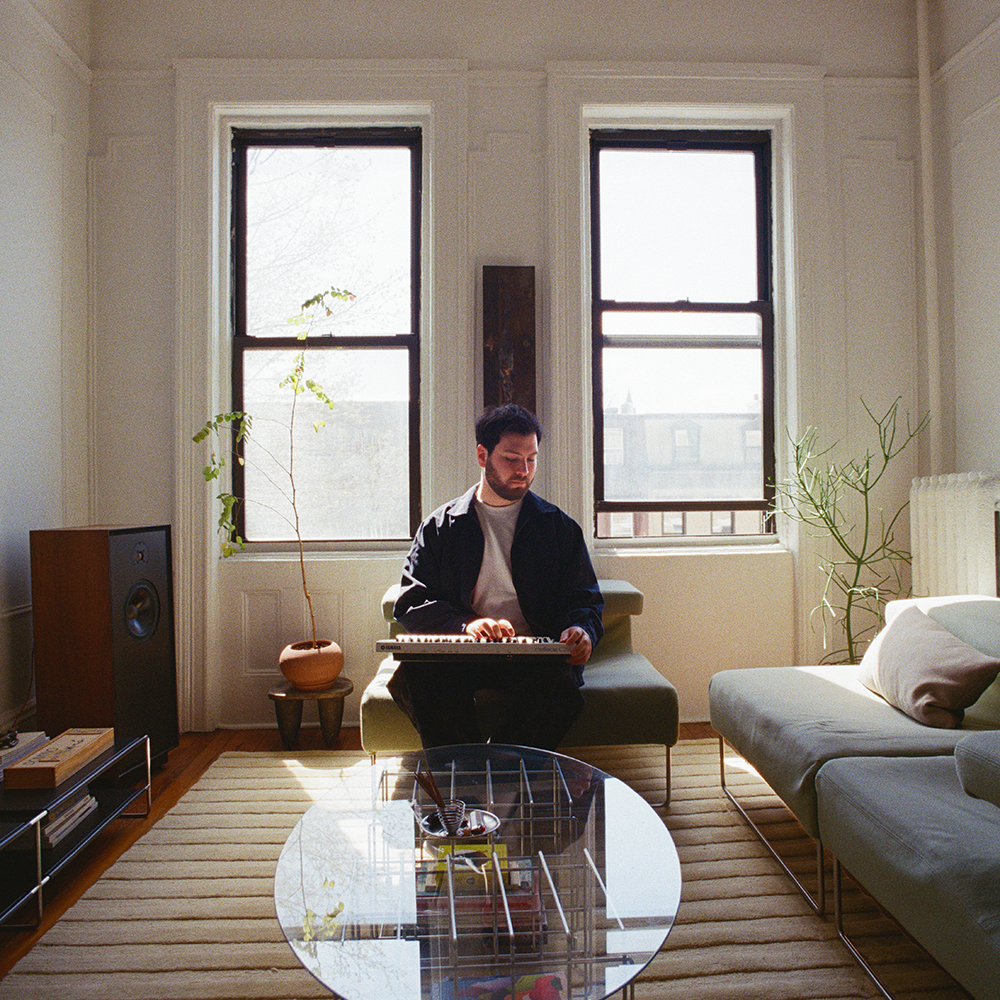
For the New York-based pianist, composer and producer Alon Schwartz, music has long offered a form of expression beyond words. His forthcoming debut album, the almost entirely instrumental Words Can’t Describe, takes its title in part from dyslexia and other learning and organizational challenges he grew up with. Arriving October 16 via The Orchard, three days before Schwartz celebrates its release October 19 at The Jazz Gallery in New York City, the nine-track album brings together nearly 20 musicians he met along his journey from Tel Aviv to Boston and New York.
Eight of the album’s nine tracks are instrumental, each tied to something specifi c in Schwartz’s life: family, friendship, grief, belonging or fi nding his own way to communicate. He began playing piano by ear at four. Reading, schoolwork and putting his thoughts into words did not always come easily, and music gave him another way to express ideas and feelings without having to translate them into sentences. That experience informs Words Can’t Describe, but Schwartz did not set out to make a record about diagnosis or struggle.
He wanted to make something that sounded like him: jazz at the foundation, but open to hip-hop, synths, songcraft and musicians whose ideas could change the music as it developed. Words Can’t Describe did not begin as a planned album. Schwartz started recording ideas in Boston, then kept returning to them over the next two years, bringing in musicians he met along the way. He estimates that roughly 80 percent of the record was made remotely or at different times.
“It’s not one band,” Schwartz says. “It’s great people I met along the way. I picked them partly because they’re the best players, but mostly because I love how they think. Every one of them hears something I don’t.” Schwartz recorded drums and strings at Power Station in Manhattan, while other musicians sent parts from home studios. Contributions arrived at different stages, and he continued shaping the arrangements as they came back. The album will be released independently, with distribution through The Orchard.
Schwartz’s earlier work sat closer to straight-ahead jazz. Here, piano and melody remain central, but hip-hop, drum-and-bass and ambient synths widen the sound. “I still think of myself as a jazz pianist,” he says. “But I’ve been producing a lot, and I didn’t want to just stay in one lane. I wanted to fi nd what sounds like me.” Melody comes fi rst. Schwartz’s infl uences range from Thelonious Monk and Horace Silver to Stevie Wonder, Kendrick Lamar and Slum Village.
He writes instrumental pieces like songs, with melody carrying the emotional weight. A phrase from Silver, passed on by a mentor, stayed with him: “sophisticated simplicity.” The goal is immediacy without thinness: a melody that lands quickly, with more underneath. The album opens with “Intro,” an ambient bed of synths featuring saxophonist Nicole McCabe, recorded remotely from California. “It sets the scene,” Schwartz says. “Before anything else happens, it gives you a sense of where you are, soundwise.”
From there, “Thus Far” places a bright piano theme over breakbeats, drum and bass and ’80s-inspired sounds. “Wrong To Be,” the album’s only vocal track, features Corbin Chapple over a loose backbeat with echoes of Graduation-era Kanye. The song comes partly from Schwartz’s difficulty saying exactly what he means, keeping track of things and dealing with the feeling that he has unintentionally let someone down. “At some point I had to decide to be good to myself,” he says. “To stop taking all of it so seriously.”
“Night Owl” comes from the hours when the world goes quiet and his mind speeds up. “Suddenly your brain starts racing, because there’s nothing else going on around you,” he says. It leads into “Red Crown,” which Schwartz began writing in Boston after a friend who was also a pianist was killed. The piece came from grieving far from home while daily life continued around him. “It’s about that feeling of grief,” he says, “but also about being in Boston while all of it was happening.”
“Everything is going on around you, you’re stuck in your own world, and life just keeps moving.” Beginning quietly, the composition grows into a large crescendo. “It builds up to this really big moment,” Schwartz says, “meant to celebrate someone’s life instead of only grieving it.” “City On The Hill,” released earlier as a single, looks back on Schwartz’s fi rst years in Boston after leaving Tel Aviv, recalling the move to a new country, the start of school and the musicians he met there.
“Ask Me Later,” meanwhile, offers a playful nod to Thelonious Monk’s “Ask Me Now,” setting a slower tempo against a relaxed groove. On the title track, Schwartz turns the album’s central idea into sound. A repeating synth fi gure runs through “Words Can’t Describe” as he returns to the same musical idea from different angles.
“It’s like the mind going over the same things again and again, trying to take them in,” Schwartz says. “Everything is clear in my head, and then I’m fi nally trying to push it through so other people understand. The words can’t describe it, so I let the music do the talking.” The record closes with “Full House,” a bouncy, celebratory thank-you to the family Schwartz grew up with: his parents, three siblings, three cats and a dog.
Its setting is the kitchen, where weekend dinners ended with music turned up and everyone washing dishes together. “With the challenges I face, I don’t know if I’d be where I am today if things had been different at home,” he says. Schwartz chose the large cast deliberately, bringing nearly 20 players into the project because they were people he respected and wanted to make music with. The songs come from his life, but he leaves room for listeners to hear their own lives in them.
“Full House” may recall another family’s kitchen; “Red Crown” may bring someone else’s loss to mind. “I wanted it to feel familiar, even the fi rst time you hear it,” Schwartz says. “Something nostalgic, something relatable.” He adds: “You don’t have to analyze it. If the music makes you feel something you can’t really explain, then we’re speaking the same language.”
Words Can’t Describe arrives October 16 via The Orchard, with Schwartz celebrating its release at The Jazz Gallery in New York City on October 19.
TRACKLISTING
- Intro
- Thus Far
- Wrong To Be
- Night Owl
- Red Crown
- City On The Hill
- Ask Me Later
- Words Can’t Describe
- Full House
MUSICIANS
- Alon Schwartz — Tracks 1–9 — Piano / Keyboards / Synths
- Paul Reinhold — Tracks 2, 3 — Electric Bass
- Mattia Muller — Track 2 — Drums
- Eli Perelman — Tracks 2, 3, 9 — Electric Guitar
- Nicole McCabe — Track 1, 2 — Alto Sax
- Ebba Dankel — Track 2 — Vocals
- Brian Richberg Jr. — Tracks 3, 5, 6, 9 — Drums
- Joey DuBois — Tracks 3, 8 — Trumpet
- Corban Chapple — Track 3 — Vocals
- Kofi Hunter — Tracks 3, 5, 6, 9 — Percussion
- Joe Melnicove — Tracks 4, 8, 9 — Flute
- Joav Ganor — Tracks 5, 9 — Bass Guitar
- Guy Gottesfeld — Track 5 — Guitar
- George Fulton — Track 5 — Tenor Sax
- Itay Rekem — Track 5 — Vocals
- Keita Ogawa — Tracks 5, 6 — Percussion
- Ben Goldstein — Track 5 — Violin
- Kayla Williams — Track 5 — Viola
- Julia Henderson — Track 5 — Cello
- Yoni Be Ari — Track 6 — Upright Bass
- Ron Warberg — Track 6 — Trumpet
- Jayla Chee — Track 8 — Upright Bass
- Yali Shimoni — Track 8 — Drums
- Nomok — Tracks 1, 2, 6, 8 — Synths
- Salim Charvet — Track 9 — Alto Sax
STUDIO PERSONNEL
- Henry Reinach — Tracks 1–9 — Engineer / Mixing
- Nomok — Tracks 2, 6, 8 — Engineer; Tracks 1, 2, 6, 8 — Synths
- Will Holland — Track 2 — Engineer
- Alon Schwartz — Tracks 4, 7 — Engineer
- Nate Mingo — Tracks 1–9 — Mastering
Alon’s Website : www.alonschwartzmusic.com
Media & Curators : www.ourgig.com