








Newvelle Records is celebrating its tenth anniversary with its Newvelle Ten Collection, a series of five distinctive albums available on a subscription basis.
Since 2016, Newvelle founders Elan Mehler and Jean-Christophe Morisseau have been swimming successfully against the tsunami-like tide of evanescent digital music by offering vinyl-only albums.
That digital surge led them to realize that the control—the ownership—of listening to recorded music had been relinquished. Just as importantly, the appreciation of music as an art form had been diminished.
Mehler and Morisseau sought to restore the ability to savor music at one’s leisure. To go back to the future.
The founders’ love of music led to a desire to touch it physically, in addition to experiencing music’s unique ability to touch the soul. To hold music. To see music. To immerse oneself in music. To own music.
Mehler and Morisseau suspected that similarly passionate jazz musicians, teachers, students, and listeners also wanted to experience music on a personal basis, rather than allowing algorithms to make their musical decisions.
How can music be touched physically, even as it touches emotionally?
By realizing their own wishes to merge music’s ethereal realm with real-world reflections on that art form, Newvelle Records’s co-founders decided on a solution by implementing at least seven points.
• Produce recordings on vinyl only so that subscribers can feel the albums and enjoy the experience of setting down the needle, as well as being able to replay the music.
• Record some of the world’s leading jazz musicians to create truly collectible albums.
• Allow the musicians to take their time to record over two days for relaxed in-the-moment refinement, even to the extent of bringing in more musicians at the last moment.
• Give digital rights to their music to the musicians after two years.
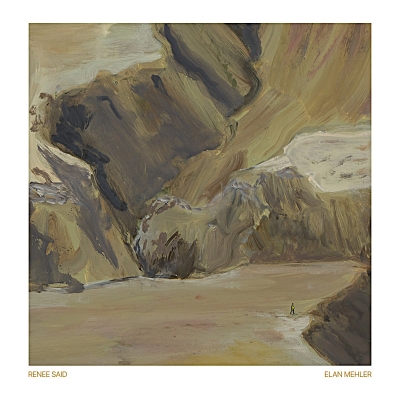
• Present on the printed covers and gatefolds original visual art from leading artists, such as Ragnar Kjartansson’s landscape impressions.
• Include creatively written texts associated with the music, such as the poetry of Pulitzer-Prize recipient Tracy K. Smith.
• Offer an annual box set of all the recordings, available on a limited basis of 500 units. Subscribers may choose to receive a new album every two months or to purchase the entire annual box set on the web site.
Their plan worked.
A musician himself, Mehler decided that others would appreciate the synthesis of three mutually supportive art forms at once. Subscribers could see the music. They could hear the gatefold artwork. They could see the images of and listen to the music of the poetry.
Now in 2026, Newvelle Records continues to provide high-end collections, havens from the streaming flood, that can become more valuable in the future. The co-founders’ original plan has been expanded and refined throughout the last ten years.
This year’s box set features internationally acclaimed jazz musicians such as Kenny Barron, Anat Cohen, Ingrid Jensen, Craig Taborn, and Bill Frisell.
A review of the entire Newvelle Ten Collection risks understating the overwhelming abundance of the box set’s memorable moments. A review of a single album—Mehler’s own recording, Renee Said—defies adequate description due to its own abundance of memorable moments.
Not only is Renee Said consistent with the series’ superlative audio quality made possible by Marc Urselli’s analog recording process and Alex DeTurk’s mix mastering for vinyl pressing.
But also, bringing the compositions to life are some of this generation’s leading jazz musicians, including Ben Monder on guitar and Tony Scherr on bass. Mehler’s concept for Renee Said required the doubling-up of two instruments: Loren Stillman on alto saxophone and Scott Robinson on tenor saxophone to establish a give and take throughout the album; and Francisco Mela and Matt Wilson on drums to deepen the music’s textural richness and propulsive bond.
Track order being one important element that contributes to an album’s total impression, “Renee Said” invites the listener’s attention with Mehler’s initial ringing two-note dissonant chord. The piece’s slowly shifting dark shades with mysterious alternating half tones follow. Then, Monder comes in to deliver the poignant unfolding of the melody as Mehler’s minor-key harmonies broaden and progress beyond the first two tones. Eventually, the septet’s other musicians add their own thoughts and sonic layers to the theme as the composition’s shimmering beauty reveals itself more fully.
In addition to “Renee Said,” Mehler composed seven of the other tracks on the album, all of which consistently provide space for the musicians to present complete thoughts suggested by the compositions’ structures, disparate though their frameworks may be.
One can understand Mehler’s statement that “this is the record that I’m most proud of.” Renee Said accomplishes his vision of recording, with pristine audio quality, an album of his own elegant, deeply felt compositions performed by widely respected musicians.
Mehler’s “White Cloud’s Dark Sky” starts when Robinson’s cushioned delivery of the melody slowly reveals itself as the call before Stillman’s response. Eventually, their sauntering lines intertwine with ever-so-slight thickening of complexity. At 2:23, Mehler’s initial hints of bluesy accompaniment become undeniable when a louder, more joyous, gospel-inspired vamp leads to a mesh of free expression before the fadeout.
In contrast, “Wolf Orchard” paints darker shades of minor-key iridescence. Mehler plays the melody with broad chords colored by oblique harmonies recalling the inventions of composers of the Impressionism movement. Mehler arranged “Wolf Orchard” as an atmospheric tone poem of sonic richness accomplished by the instruments’ blends. Monder’s accompaniment at first glistens, enhancing the melody. Then, he plays a part of the melody himself, only to hand it off to Stillman, who similarly adds a melodic fragment over the group’s voicings. Having achieved his elegant, retrained statement of scintillating beauty, “Wolf Orchard” concludes at just under three minutes. The instantaneous communication among the musicians becomes notable as they join to create a musical palette, one color brightening and receding as another emerges to shine and then add to the blend.
“The Violence of Reason” elaborates upon Mehler’s affinity for the soulfulness of the blues as it suggests the slow walking rhythm of Charles Mingus’s “Goodbye Porkpie Hat.”
In contrast, “Tilt,” a more complex composition, evolves from the Mehler’s introductory repeated rubato phrase, played with teasing delicacy. At :41, though, he launches the piece’s primary motive, to be reflected by Stillman as Robinson provides sustained harmonic support. But, at 2:18, Mehler’s bass-clef rumbling ominously abandons the preceding melodic phrasing for a crashing, free, altissimo, atonal group improvisation. Having had their chaotic outburst, the group returns to the original melody at 4:48 to complete the piece.
In addition to Mehler’s compositions, Renee Said includes works written by two jazz icons whom members of Mehler’s septet knew and admired.
Drummer Paul Motian’s “Byablue” bookends the track selections of an album of the same title that was one of the last recordings of Keith Jarrett’s “American Quartet,” which included Dewey Redman and Charlie Haden. Tony Scherr’s forceful bass lines and Mehler’s smash chords ground the group in impassioned blues improvisations. The recording includes Mela’s and Wilson’s dual drumming commemorations of Motian before the piece’s strong rhythm dissipates into a free-jazz ending, which represents an expression of the joy that Motian’s music inspired. Both Stillman of Motian’s Trio 2000 + 2 Quintet and Monder of Motian’s ECM band revel in the opportunity to play Motian’s music once again.
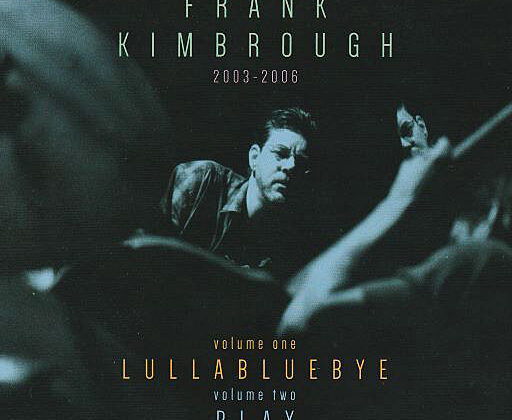
Renee Said also fondly remembers pianist Frank Kimbrough, whose performances and whose mentorship at The Juilliard School inspired numerous jazz musicians, including the present generation of young musicians that includes Micah Thomas and Immanuel Wilkins. Kimbrough’s creativity contributed to the inimitable sound of the Maria Schneider Orchestra or helped craft the personality of Matt Wilson’s Arts and Crafts Group. In addition, Kimbrough accepted the challenge of recording with Robinson, Rufus Reid, and Billy Drummond all of Thelonious Monk’s compositions, the result being Monk’s Dreams: The Complete Compositions of Thelonious Sphere Monk (a box set of 70 tracks on six CD’s). Mehler chose to include on Renee Said Kimbrough’s “Quickening” from his trio album of the same name. Mehler plays the first chorus with Kimbrough’s fluid, pensive, understated style, as Scherr plays contrapuntal lines, connected to but separate from Mehler’s. Monder’s and Robinson’s solos recall their work with Kimbrough on his Noumena album, their sustained, exquisite ringing tones embellishing the concise melody with graceful resplendence.
The third album in the Newvelle Ten Collection, Renee Said is a work of art to savor—poetically, visually, and musically.
And so are the other albums in the Collection.
Label’s Web Site: Newvelle-records.com