







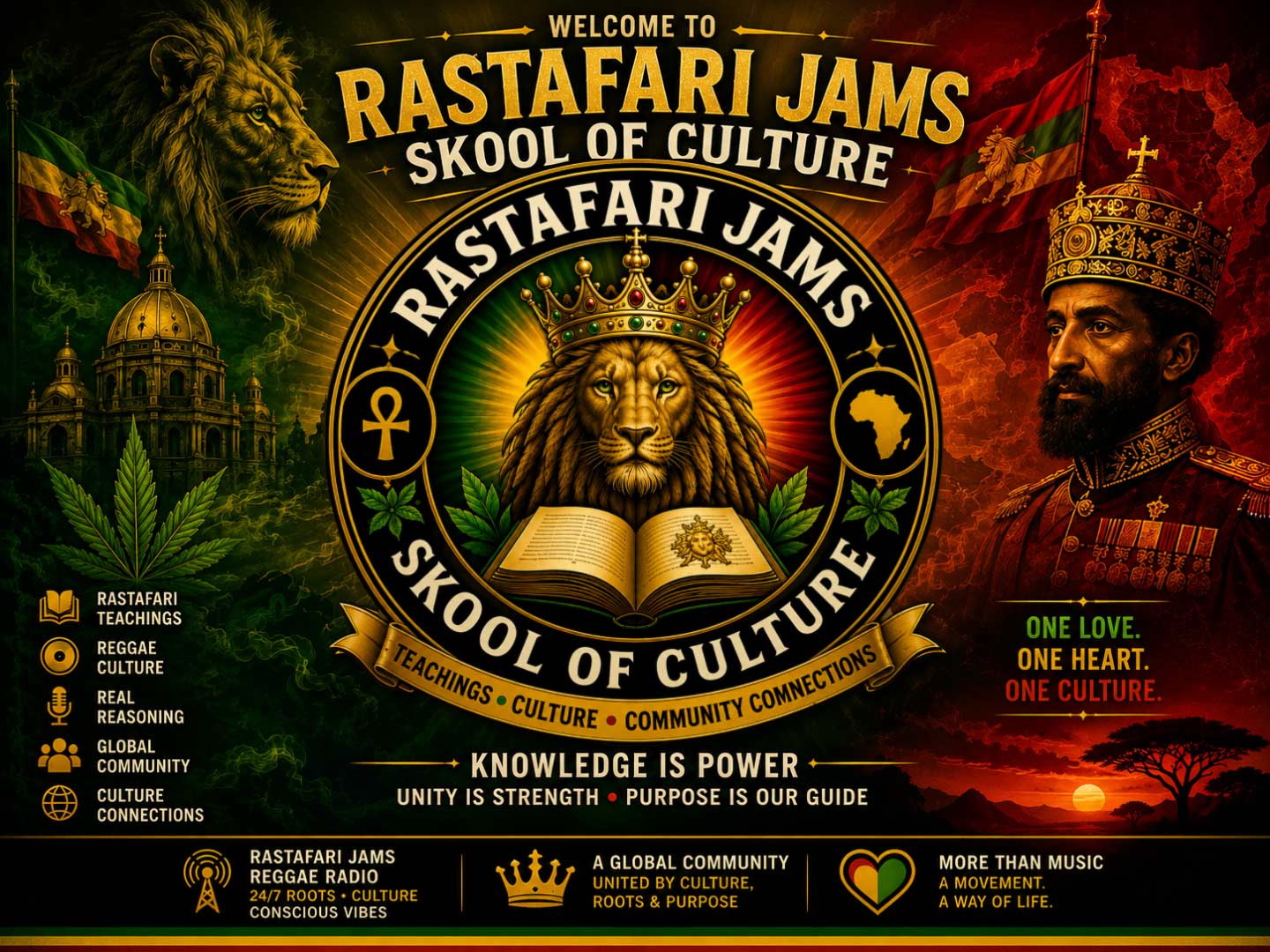
PJ “The Rastapreneur” has long understood something many in music are still catching up to: real cultural impact is not just about audience size, but about connection. For years, he has been best known as the Architect and Program Director of Rastafari Jam’s Radio, a platform that has reached millions of reggae fans worldwide while steadily creating new ones through authentic programming, consistent vision, and a deep respect for the culture. But now, PJ is entering a new phase—one that shifts his focus from broadcasting to building.
His latest venture on the Skool platform signals more than a new project. It marks a natural evolution for someone who has already proven he can capture attention at scale and now appears focused on creating something even more valuable: community.
That progression makes sense. Rastafari Jam’s Radio helped establish PJ as a trusted voice in reggae media, someone with the instinct to understand not just what audiences want to hear, but how culture moves, grows, and sustains itself over time. The platform’s reach gave him influence, but influence alone was never the endpoint. What has always set PJ apart is his entrepreneurial mindset—his ability to see beyond the broadcast and into the broader ecosystem surrounding the music, the message, and the people who connect through both.
That is where the new Skool venture becomes especially compelling.
Rather than simply expanding his digital footprint, PJ appears to be creating a destination for deeper engagement—a place where reggae culture can be explored in a more participatory way. In today’s media environment, that matters. Audiences increasingly want more than content pushed in their direction. They want access. They want dialogue. They want to be part of something. PJ’s move into Skool reflects an understanding that the future of influence belongs to those who can create spaces for belonging, not just visibility.
It also reflects the meaning behind the name “The Rastapreneur.” PJ is not operating solely as a radio programmer or media personality. He is building at the intersection of culture and enterprise, blending authenticity with strategy in a way that feels both timely and organic. His work has always carried the energy of someone invested in reggae not only as music, but as a living platform for education, inspiration, and connection. With this new venture, that idea seems to be taking a more structured form.
There is something especially significant about this stage of his evolution. Many creators succeed in building audiences. Far fewer succeed in turning that attention into an engaged, purpose-driven community. PJ’s next chapter suggests he is aiming for exactly that. By using the credibility he built through Rastafari Jam’s Radio as a launch point, he is positioned to bring fans, supporters, and curious newcomers into a space that offers more than entertainment. It offers participation.
And that may be the real story here.
PJ “The Rastapreneur” is no longer just reaching reggae audiences old and new he is creating a framework for how those audiences gather, interact, and grow together. If Rastafari Jam’s Radio established his voice, this new Skool venture may define his legacy: not simply as a broadcaster of culture, but as a builder of it.