







Resonance Records’s impressive output continues unabated as producer Zev Feldman finds more and more analog tapes of previously unavailable recordings of important jazz performances.
A major keeper of those tapes was Joe Segal, the well-known and admired founder of Chicago’s Jazz Showcase. Feldman’s persistence paid off when, in celebration of Joe Segal’s one-hundredth birthday, Resonance Records commercially released Joe Henderson’s, Ahmad Jamal’s, Yusef Lateef’s, and Mal Waldron’s concerts at the Jazz Showcase.
No doubt, many more albums from past Jazz Showcase recordings will become available. Feldman writes that “Joe’s archives comprise one of the greatest libraries of previously unissued jazz recordings in existence.” In addition to the audio tapes, Segal sometimes was seen recording on VHS tapes some of the performances in his later years.
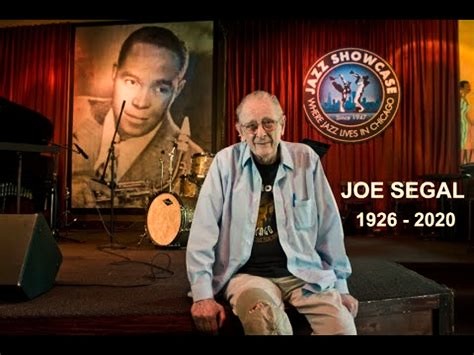
How fortunate that Segal recorded so many could-have-been-legendary-by-now performances.
When I interviewed Segal, he said, “We had been recording all this stuff since 1957. In fact, the first session we recorded was Lester Young’s last at the Pershing Ballroom on Christmas of ’57.”
How fortunate that Feldman received permission from Segal’s son, Wayne, to produce these albums with the diligent care and appropriate resources that Resonance Records always organizes for each of its albums.
Joe Segal kept the jazz flame burning in Chicago—as did, for example, Max and Lorraine Gordon, founder and proprietors of the Village Vanguard.
Jazz remained forever in Segal’s heart ever since he first listened to it in his hometown of Philadelphia.
Segal recalled that “jazz was on the radio all the time. The only live performances I used to hear were at the Earle Theater. I used to hear Goodman, Basie, and Shaw there. A buddy and I would take our lunch and go there on a Saturday morning. The first show was at ten in the morning, and we stayed there until ten at night. Before I was drafted, I told my mother that I had to go to New York to see these guys in person. I said, ‘I might never come back.’ She didn’t like that. My mother played piano by ear. Of course, it was better when she used her fingers.”
After Segal moved to Chicago, he dedicated his life to jazz.
Segal became acquainted with the jazz world’s leading musicians. In addition, he provided opportunities for local jazz musicians to perform in his club. He supervised Rahsaan Roland Kirk’s first recording.
Despite continuing challenges, Segal persevered. He remembered one unusual incident: “One night on Rush Street, the ceiling fell in during a break when Chuck Mangione was there. We were able to get everybody out of there. We tore down all the tile. There was dust in the air the whole next week.”
And then there were the financial challenges.
Segal said, “I didn’t have any corporate money. I worked for my money, and I was raising a family of five children. What came in at the door went to the musicians. If I had some money left, I was able to use that as income. I was enjoying the music. If I had a couple bucks in my pocket afterwards, fine!
“I remember once while the club was in The Blackstone, we were going to close the club. Erma Pickens, Willie Pickens’s wife, said, “You can’t do that!” So, they set up an “SOS” promotion: “Save Our Showcase.” We raised quite a bit of money and paid off some of my debts. A couple of times, I had to borrow money from relatives. Eventually, we paid that back. Basically, since the latter part of the time at The Blackstone, I guess we’ve been fairly solvent. We don’t have a lot of reserves in the bank.
“We’re the only place that provides jazz week after week and which gives the musicians six nights for performing.”
I remember seeing Joe Segal on a jazz cruise, and I was glad that he could immerse himself in the music he loved in a relaxing climate warmer than Chicago’s.
After Joe Segal passed in 2020 at the age of 94 (while listening to Bird), Wayne Segal assumed full responsibility for the Jazz Showcase’s operations. In the notes for each of the Resonance Records packages, Wayne recalls his father’s lifelong passion for jazz and his friendships with the musicians. As the co-executive producer of these releases, along with Resonance Records’s founder George Klabin, Wayne contributes to the accuracy and the quality control of the albums.
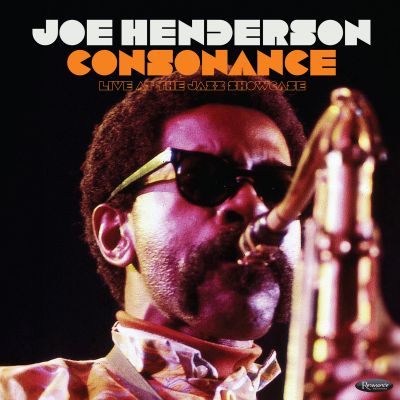
The Joe Henderson album, Consonance: Live at the Jazz Showcase, was recorded in the winter of 1978, when he was in his prime and when the Jazz Showcase was in the basement of the Happy Medium on Rush Street. The expressive freedom afforded by the Jazz Showcase allowed Henderson to play with the full range of his instantly identifiable style that inspired the next generation of tenor saxophonists.
Starting with John Coltrane’s “Mr. P.C.,” Henderson, backed by pianist Joanne Brackeen, plays with fast-paced authority, as if he had been holding back his abundance of apparently pent-up ideas and irresistible energy that such freedom allowed. Henderson to explore the piece for more than almost 24 minutes, unrestrained by the exigencies of studio recordings.
Henderson developed his own composition, “Inner Urge,” for an even longer 26 minutes. The shift in his tone and approach from “Mr. P.C.” is a reminder of the immediate creativity of his improvisations, never repetitive. His roars, his effortless arpeggios contrasting with urgent sustained tones, his unique beseeching altissimo phrases, his swirling phrases, and his rhythmic feel adds an urgent edge to his playing.
During the concert, Henderson’s similarly energetic approach to another of his compositions, “Recorda Me” (interpreted over 23 minutes), contrasts with his inimitable version of Monk’s “’Round Midnight,” which proceeds over a more relaxed tempo. Henderson bookends his version with memorable cadenzas.
Resonance Records’s first release from the Jazz Showcase archives, Consonance: Live at the Jazz Showcase, also is notable for Segal’s tendency to assemble unexpected, and sometimes once-in-a-lifetime, groups. The anticipated result was the invigorating spontaneity that arises from the exchange of new ideas. Henderson’s back-up rhythm section included young local bassist Steve Rodby and Michigan-based drummer Danny Spencer, both of whom propelled the session with the split-second interactivity and crackling force that Henderson’s playing required.
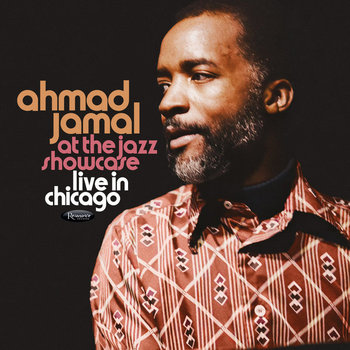
Segal developed a friendship with Ahmad Jamal during his residency at the Pershing Hotel in Chicago. Those were Jamal’s formative years when the pianist became famous from his recording of “Poinciana.” Jamal returned to Chicago occasionally to play at the Jazz Showcase, even after he moved to New York in 1962. Jamal’s sessions there with bassist John Heard and drummer Frank Gant in March, 1976, unknowingly recorded, provided fascinating new material for Feldman.
By this time, Jamal had expanded noticeably upon his well-known style of “Poinciana’s” melody-vamp-and-minimalism. Feldman documented the growth of his later style in three other albums recorded at The Penthouse in Seattle: Emerald City Nights, Vol. 1, 2 and 3 (which Jamal co-produced before he passed).
Jamal’s playing became more virtuosic as he incorporated ideas from his early classical training; more unpredictable with unexpected plunging accents and graceful arpeggios; more expressive as he lengthened his performances of each piece; and more personal with the addition of his own compositions instead of his interpretation of standards.
While Henderson’s Consonance album represents Segal’s dedication to bringing jazz’s best of the best to the Jazz Workshop, Ahmad Jamal at the Jazz Showcase: Live in Chicago is a reminder of his devoted dedication to local musicians too, including Pickens, Jodie Christian, and Ira Sullivan.
The recent Resonance package—available as a two-LP or a two-CD album—highlights the precision of Jamal’s technique, his close attention to touch, and his passionate immersion into music.
The first track, “Ahmad’s Song,” is appropriately titled because of the lyricism that forms the foundation of Jamal’s interpretations. Starting with his rubato introduction of the melody and the awe-inspiring first chorus, Jamal continues to inspire awe throughout the performance as he alternates soft delicacy with rapid, unexpected, sweeping arpeggios. He moves into a faster second pulsating segment at 3:24, which uplifts the audience when Gant is engaged for full percussive support.
As Fred Hersch writes in his notes included with the package, “I think he’s one of those very singular pianists in jazz.”
Like other singular jazz virtuosos, such as Herbie Hancock, Jamal doesn’t repeat himself. He continues to develop spur-of-the-moment ideas and alternative approaches. Accordingly, each performance is singular.
Jamal’s version of Hancock’s “Dolphin Dance,” an indication of the pianists’ mutual respect, combines Hancock’s harmonic genius with Jamal’s distinctive style. Jamal reharmonizes, develops his own vamps, lengthens phrases, changes moods and colors, inserts hard accents, adds his own recognizable voicings, alternates rhythm patterns with Heard and Gant, and contributes his improvisational concepts at will.
Jamal’s own masterwork, “Swahililand,” at 21+ minutes the longest track in the album, proceeds with leisurely grace and eloquence. An extended quote of “God Rest Ye Merry Gentlemen” (which provides a harmonic basis for the piece) leads to a thrilling crescendo—from pianissimo to fortissimo. Its tremolos evolve into an electrifying presentation of his boundless imagination combined with his inimitable style.
Like Henderson’s, Jamal’s booking at the Jazz Showcase was one not to be missed. And because the rest of the world missed it, except for those in the audience, Jamal at his best can now be heard on Ahmad Jamal at the Jazz Showcase: Live in Chicago.
Segal was the friend of every jazz musician, but he knew some better than others. (Wayne Segal recalls that before Joe Segal passed, “I’d go to his house to visit him, he’d be on the phone with Sonny Rollins…. His closest friends were the musicians, and every time one of them passed away, he’d call me up and cry like a baby and I’d have to go to his house and cradle him to tell him it’s okay.”)
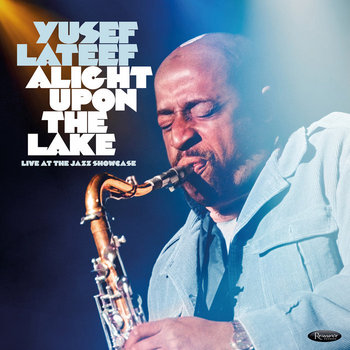
One of his best friends was Yusef Lateef, who played often at the Jazz Showcase and sometimes on New Year’s Eve. In the interview, Segal said, “The first really steady venue was in The North Park Hotel. We did Sunday afternoons and nights there. Yusef Lateef had said, ‘I can’t afford to come in to play for just one day.’ I think he was still living in Detroit then, although he had been living in Chicago before that. He said, ‘I have the whole weekend open. Why don’t you just try the weekend?’ So I had Friday, Saturday and Sunday with him, and it worked.”
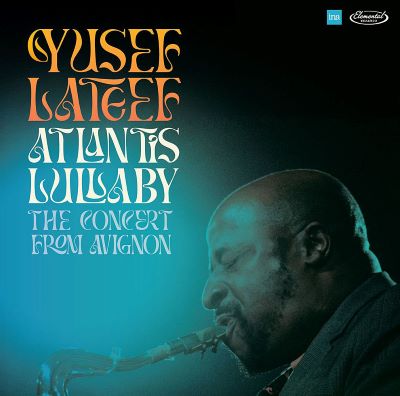
Lateef’s performance in June, 1975, is included in Resonance Records’s first group of Jazz Showcase albums as Alight upon the Lake: Live at the Jazz Showcase (available as a three-LP or three-CD package).
The strength of Lateef’s personality affected Feldman too. In the notes for all the Lateef releases he produced, Feldman recalls his conversations with Lateef from decades ago when the twenty-year-old Feldman directed the music of a college radio station.
Everyone who knew Lateef was impressed by the range of his playing—from blues to free jazz—as well as by the spirituality and humanism of his art form, which he termed “autophysiopsychic music.” Like Henderson and Jamal, Lateef was one of a kind whose music emerged from his being as he played.
The immensely talented and always humble Bennie Maupin—who was similarly generous in his praise of Freddie Hubbard in the notes for the trumpeter’s Resonance album, On Fire: Live from the Blue Morocco—writes for Alight upon the Lake: Live at the Jazz Showcase that Lateef “was my mentor from age 14. He was my model. He’s the reason I’m a multi-instrumentalist. He was a wonderful person. Brilliant. Forever learning, forever seeking, forever gracious.”
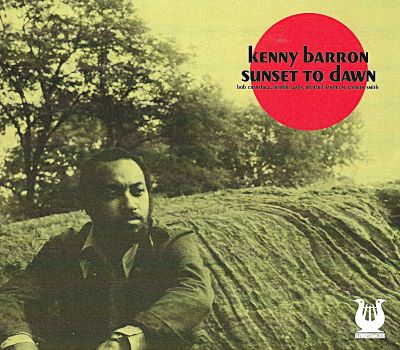
Fortunately, Lateef assembled a superb quartet in early 1975 that included Kenny Barron on piano, Bob Cunningham on bass, and “Tootie” Heath on drums. The exceptional talent of every member of the quartet led to its exhilarating sessions at the Jazz Workshop.
Alight upon the Lake commences at a prestissimo tempo with Barron’s “The Untitled,” at 29 minutes the longest track in the album. Obviously needing no warm-up, the quartet charges out of the gate after Heath softly kicks off the beat. The group is immediately cohesive. Lateef and Barron surge with rapidity, force, and an immediate connection to the audience. At 4:50, Lateef’s sustained growls and overtones settle into a trance-like meditation based on a Phrygian mode.
The album includes a reminder of Lateef’s explorations on other instruments besides the saxophone. He plays on flute with lyrical clarity drummer Roy Brooks’s “Ebonness,” a medium-tempo composition propelled by Cunningham’s vamp, Barron’s thick chords, and Heath’s textures. Barron plays one of his inimitable solos—in a style that he continues in present-day performances. He balances melodic improvisation with gliding harmonic inventions, intimations of swing, and distinctive coruscating phrases of thirty-second notes. Cunningham’s singing arco bass solo, played with resonant authority, follows.
Lateef’s respectful composition, “I Remember Webster,” recalls the influence of The Brute and the Beautiful upon his own tone and technique. In his lifetime, Lateef, a bridge between generations, continued to influence musicians of the next generation, such as percussionist Adam Rudolph. “I Remember Webster,” slow and haunting and harmonically complex and beautiful, showcases Lateef’s attention to vibrato and warm sustained notes.
Lateef entrances the Jazz Showcase audience with his poetic romanticism too. He prefaces “Golden Goddess” with his original lyrics: “If I were the wind / I’d become a raging hurricane / Sweep you off your feet / And we would sail over the sea / To enchanted cities of yesterday. / Then we would take off / Into the ether.” After the audience’s applause, Lateef, with on-pitch purity and force, develops on flute the melody that evolves from the delicate pattern that Barron played under the initial poetic recitation.
Like Maupin, Segal and Feldman came under the spell of Yusef Lateef’s music. Now, 51 years after the Jazz Showcase sessions, both of them have combined their talents to present Lateef in a package worthy of his significant impact upon jazz.
Alight upon the Lake: Live at the Jazz Showcase showcases during almost three hours of Yusef Lateef’s music the breadth and depth of his talent, his thoughtful interpretations, and the alluring and enduring appeal of his music.
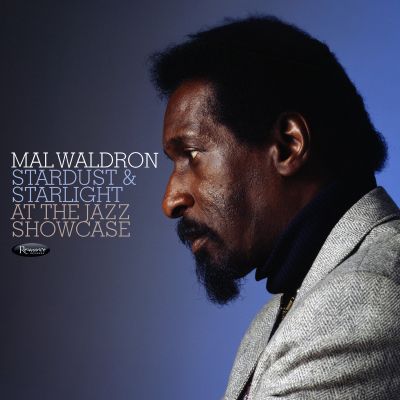
Resonance Records’s fourth release of a Jazz Showcase event, Stardust & Starlight: At the Jazz Showcase, captures yet another jazz master after he had become less accessible, and therefore more unknown, to American audiences. Mal Waldron moved to Munich in 1967 (and then to Brussels in the nineties) after a drug overdose in 1963 disabled him—“disabled” meaning that he lost his ability to play the piano. Waldron’s recovery process borrowed from all his previous experiences with leading jazz musicians: Horace Silver, Charles Mingus, Billie Holiday, Max Roach, Duke Ellington, and Thelonious Monk. A darker, more angular, thicker voiced, and minimalistic style emerged. Stardust & Starlight captures Waldron’s regenerated abilities and his deeply emotional bearing during his second prolific period that, ironically, American audiences heard less frequently.
Initially all alone at the piano at the Jazz Showcase, Waldron plays “All Alone,” a song he wrote for Billie Holiday, with accented half notes in the lower register while he performs the introspective melody with his signature style of quick note repetition, instead of tremolos.
Waldron ominously starts his composition, “Fire Waltz,” with a similarly forceful sustained declaration before he lightens the mood with the sway of the jazz waltz. The dissonance of his adjacent-note chords and the piece’s minor-key mysteriousness balance outright sunniness with darker clouds. House bassist Steve Rodby, who was then at the start of his jazz career, delivers a resonant solo before drummer Wilbur Campbell trades fours with Waldron.
The remainder of Waldron’s 1979 concert consists of his soulful interpretations of standards such as “I Thought about You,” “It Could Happen to You,” and “Old Folks.” Waldron considered himself a disciple of Monk. He told British jazz writer Alyn Shipton, “I became a very angular player [after the breakdown], becoming more like Thelonious Monk in playing and composition style.” In acknowledgement of Monk’s influence, Waldron plays “’Round Midnight.” However, no one would confuse his style with Monk’s. Waldron’s version is his own with his own jabbing chords played at his own tempo.
For the Jazz Showcase’s 1979 Charlie Parker Month, Segal booked the remarkable bebop saxophonist, Sonny Stitt, to perform with Waldron. Perhaps Segal chose to combine their different approaches to jazz to satisfy his sagacious curiosity about the astonishing result that might occur.
For three minutes, Stitt improvises “Old Folks” on alto sax at a slow tempo, as Waldron sparely fills in the harmonies, as if the trio were the saxophonist’s backup rhythm section. After the preceding chorus’s turnaround, Stitt delivers at 2:11 one of his astounding cadenzas before the rousing finish. Similarly, “Stardust” reveals yet another of Stitt’s virtuoso performances, again at a deliberate pace, and again ending with a brilliant cadenza.
Waldron and Stitt themselves may have unintentionally suggested the name for the release, Stardust & Starlight. Waldron plays “Stella by Starlight”; he and Stitt conclude the album with “Stardust.”
Anyone who has visited the Jazz Showcase knows that many, many more extraordinary performances occurred there because of Joe Segal’s passion for jazz and his close relationships with the musicians.
Feldman’s talent as a producer, his own relationships, and his dedication to jazz will no doubt lead to more important releases recorded at the Jazz Showcase in Chicago.
Web Site: https://resonancerecords.org/