




Introduction to Stevie Wonder and Barack Obama
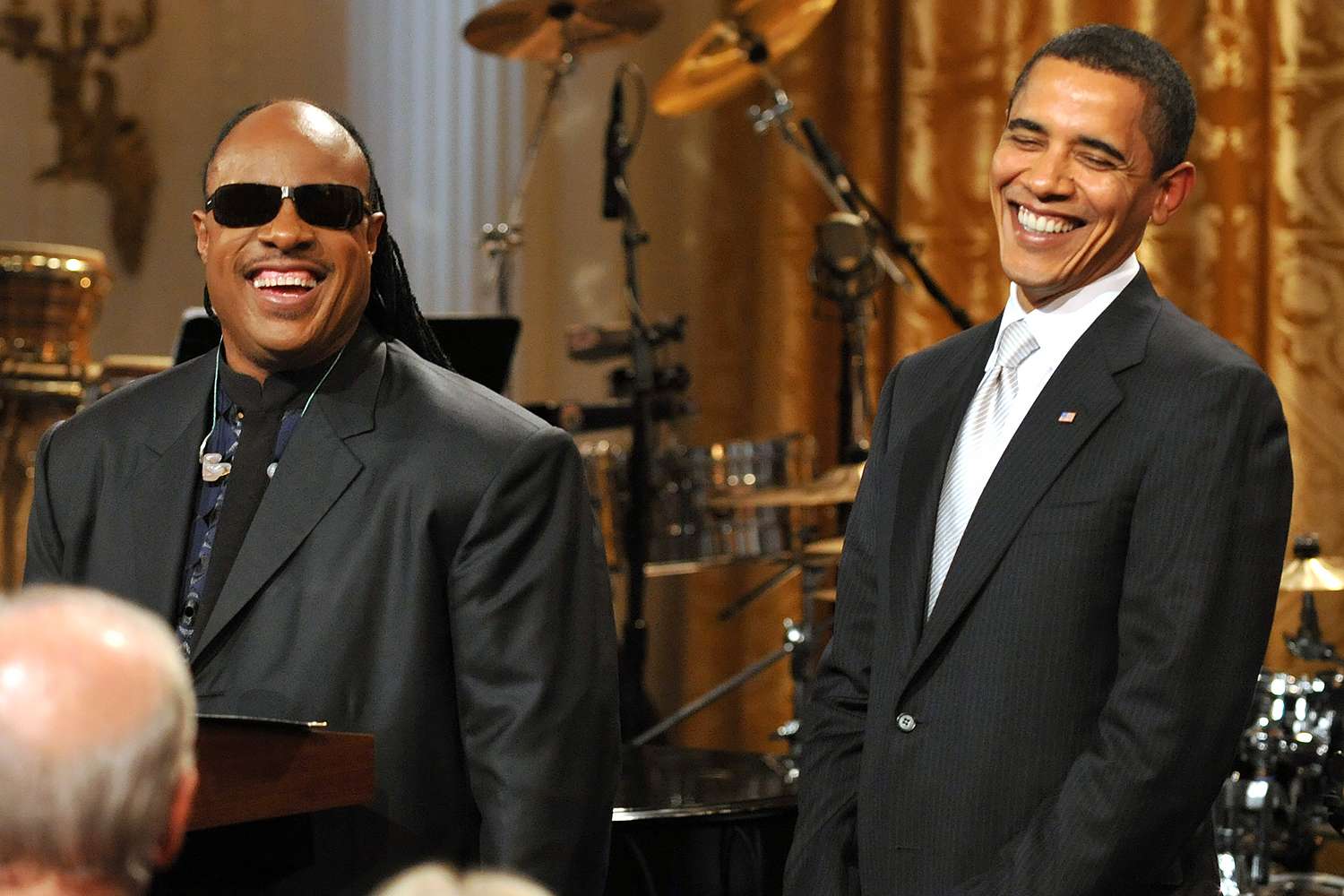
Stevie Wonder and Barack Obama come from vastly different worlds, yet their stories share common threads of perseverance, vision, and an unwavering desire to create meaningful change. Stevie Wonder, celebrated worldwide for his unmatched musical genius, has used his agency to advocate for justice, equality, and human connection. Barack Obama, rising from community organizing in Chicago to becoming the first Black President of the United States, ignited a movement defined by hope and inclusivity.
Their meeting represented more than just a cultural moment; it was a convergence of ideals. Both men have spent their lives breaking barriers—Stevie in the realm of music, and Obama in the political landscape. Stevie’s music has inspired generations to dream beyond limits, while Obama’s leadership encouraged millions to believe in the promise of a united and equitable America. Their shared experiences of overcoming challenges and redefining what’s possible make their connection deeply meaningful.
This meeting wasn’t just about two individuals; it was about the undeniable power of art and leadership coming together. Their collaboration would go on to remind the world that creativity and vision can spark movements, bring people together, and inspire action for a better tomorrow.
Steve McKeever’s Role in Their Meeting
Steve McKeever, a trailblazer in the music industry and founder of Hidden Beach Recordings, played a key role in bringing Stevie Wonder and Barack Obama together. With a keen ability to recognize opportunities where art and activism intersect, McKeever saw the potential for something extraordinary. He understood that both Wonder and Obama shared a deep commitment to empowering communities and advancing meaningful change, making their connection not just timely but essential.
With a remarkable track record of presenting iconic talents like Jill Scott and producing The Ground Breaking collection UNWRAPPED, McKeever’s founding of MoJAZZ Records under Motown emphasizes his drive to spotlight genuine and impactful voices. As Barack Obama was running for senator from Illinois, McKeever dreamed of a collaboration between the emerging leader and a legendary artist, striving to spread a unified message of hope and solidarity. His efforts went beyond political boundaries, focusing on creating connections and inspiring others through shared beliefs.
Acting as a trusted connector, McKeever approached Stevie Wonder with a proposition that required more than a casual endorsement. He presented Wonder with the opportunity to support a candidate whose values aligned with his own lifelong dedication to equality and progress. McKeever didn’t just facilitate introductions—he laid the groundwork for a collaboration that went beyond professional interests, nurturing an environment where mutual trust and respect could flourish.
His role as an industry insider with a pulse on cultural movements later allowed McKeever to see what others might have missed: the undeniable power that comes from merging the influence of music with the momentum of grassroots activism. McKeever’s vision reflected his understanding that music, when paired with leadership, has the potential to move hearts and mobilize change.
Stevie Wonder’s Initial Hesitation
Stevie Wonder approached the idea of supporting Barack Obama with thoughtful deliberation. For an artist whose career has been defined by authenticity and a deep sense of purpose, the decision to endorse a political figure was not one to take lightly. Wonder understood the responsibility that came with using his agency, recognizing that his voice carried influence far beyond the stage. His initial hesitation stemmed from a desire to ensure that his values aligned with those of the person he would stand behind.
As someone who had witnessed and contributed to monumental social movements through his music, Stevie was no stranger to the weight of advocacy. He knew the importance of aligning with causes that genuinely resonated with his principles and his lifelong fight for equality and justice. He wanted to be certain that any candidate he supported would embody the same integrity and dedication he held close throughout his career. Stevie was not merely interested in political promises; he wanted to see substance, action, and a clear vision for progress.
It was during this period of consideration that stories about Barack Obama began to reach him. Accounts of Obama’s work as a community organizer, his dedication to uplifting underrepresented voices, and his ability to inspire hope intrigued Stevie. But even then, he was cautious. He sought to understand not just the candidate’s policies but the person behind the campaign. Stevie wanted to know if Obama’s values were rooted in a genuine commitment to creating change or if they were simply part of a political narrative.
This level of scrutiny was reflective of Stevie’s deep respect for the influence of his artistry. He knew that lending his name and legacy to someone required more than a surface-level understanding of their ambitions. His hesitance was not about avoiding involvement but about ensuring that any involvement would be meaningful and true to the causes he had championed throughout his life. It was important to him that any decision he made would amplify a message of authenticity and inspire others to take action.
What ultimately helped dissolve Stevie’s doubts were not speeches or campaigns but the undeniable sense of purpose and sincerity he saw in Barack Obama. Witnessing the way Obama connected with people and articulated a vision of unity and progress began to shift Stevie’s perspective. This wasn’t just about politics; it was about the opportunity to align his music’s message of hope and humanity with a movement that sought to bring those values into the fabric of American life.
The Meeting That Changed It All
When Stevie Wonder and Barack Obama first met, the energy in the room was undeniable. Their conversation unfolded naturally, rooted in shared purpose and a mutual respect for the paths they had taken to create change. Stevie, with his decades of using music as a agency for justice and connection, and Barack, with his deep commitment to empowering communities through action and leadership, found themselves aligned in ways that transcended the worlds they came from.
They talked about more than policies or political ambitions; their exchange was a meeting of minds, built on a genuine desire to explore how art, culture, and leadership could intersect to inspire real progress. For Stevie, this was an opportunity to get a closer look at the man behind the growing movement—a man whose actions and words had already begun to resonate with people across the country. For Barack, sitting down with a global icon like Stevie Wonder was a chance to connect with someone whose music had been a lifelong inspiration and whose values reflected the heart of his campaign’s message.
The dialogue between them was honest and reflective. Stevie wanted to understand not only Obama’s vision but also his motivations, his struggles, and his dedication to serving others. This was not just about backing a political figure; for Stevie, it was about recognizing a shared determination to address inequality and give a voice to those who felt unheard. Their meeting opened the door to collaboration, but it also revealed a profound alignment of values—values grounded in hope, unity, and the belief that change begins with action.
As they spoke, it became clear that their connection was rooted in a desire to not only imagine a better world but actively work toward building it. They discussed the power of music to uplift and unite, the strength found in communities, and the challenges of striving for equity in a world that often resists change. Their shared experiences—though shaped by different fields—formed a foundation of understanding and trust.
What stood out most to Stevie was the authenticity and thoughtfulness Barack Obama brought to the conversation. This was a man who listened as much as he spoke, who carried a sense of purpose that felt deeply personal yet universal in its reach. It was the kind of exchange that planted seeds for something greater—a partnership not built on convenience, but on a shared mission to inspire and empower people across the nation.
Building a Lasting Friendship
Over time, the connection between Stevie Wonder and Barack Obama evolved from a powerful collaboration to a deeply rooted friendship. Their bond, built on mutual respect and shared ideals, reflected the kind of relationship that transcended their respective fields of influence. Stevie’s unwavering dedication to justice and equality found a kindred spirit in Barack, whose leadership embodied the hope and determination to create a more inclusive society.
What made their friendship unique was its foundation in authenticity. They were not just public figures working together for a common goal—they were individuals who genuinely valued the perspectives and experiences the other brought to the table. Stevie, known for his ability to use music as a bridge for connection, found in Barack someone who understood the transformative power of art and its ability to bring people together.
Their conversations went far beyond politics or music, delving into shared values and personal insights. Barack often admired Stevie’s ability to inspire action through his artistry, while Stevie appreciated Barack’s calm yet resolute approach to challenges. This mutual admiration fostered a relationship that felt grounded, personal, and deeply supportive.
Their friendship also extended to Michelle Obama, creating a circle of encouragement and shared purpose. Stevie’s bond with the Obamas was a testament to the alignment of their values—a belief in empowering communities, uplifting underrepresented voices, and driving meaningful change. This personal connection allowed them to collaborate in ways that were not only impactful but also genuine.
As Barack’s campaign gained momentum, Stevie became more than just a supporter. His involvement carried a sense of purpose, one that reflected their shared vision for a united and equitable future. The personal trust between them fueled Stevie’s commitment, as he recognized that this was a partnership rooted in a genuine desire to create lasting impact.
Even outside the public eye, their friendship continued to grow. Whether through shared moments of reflection or collective efforts to inspire action, Stevie and Barack supported each other in ways that demonstrated the strength of their connection. They became confidants who could lean on one another, drawing from their unique experiences to navigate the challenges and opportunities that came their way.
Through their interactions, it was clear that their bond was more than symbolic. It was a living example of how shared purpose and mutual respect can cultivate relationships that not only inspire but also endure.
Music’s Role in the Historic Campaign
Music became an essential force in Barack Obama’s historic campaign, serving as a bridge between diverse communities and a rallying cry for collective action. With Steve McKeever at the helm, Hidden Beach Recordings crafted two transformative albums, “Yes We Can: Voices Of A Grassroots Movement” and “Change Is Now: Renewing America’s Promise.” These albums captured the spirit of the movement, amplifying its message through songs that resonated deeply with listeners. The project wasn’t just about creating memorable tracks; it was about weaving music into the heart of a campaign that sought to bring people together through shared purpose and hope.
The involvement of artists like Stevie Wonder elevated these albums to more than just campaign tools—they became cultural landmarks. Stevie’s voice, already synonymous with messages of equality and justice, added an unmatched authenticity to the music. His ability to convey emotion and purpose through his artistry ensured that the campaign’s core ideals were not only heard but deeply felt by millions. Each track became a testament to the belief that music, when rooted in truth, has the capacity to inspire change on both personal and collective levels.
McKeever’s vision for these albums extended far beyond the traditional role of campaign music. Rather than relying solely on well-known anthems, he curated a collection of songs that reflected the grassroots nature of Obama’s movement. The music celebrated diversity, uplifted underrepresented voices, and emphasized the importance of community-driven progress. By blending established names like Stevie Wonder with emerging artists, McKeever created a agency that showcased the campaign’s commitment to inclusion and innovation.
The synergy between the campaign and these albums was powerful. Songs like Stevie’s contributions acted as rallying points at events, bringing people together and infusing gatherings with energy and optimism. The music reached beyond rallies and speeches, touching people in their homes, cars, and daily lives. It reminded listeners that the campaign was not just about politics—it was about people, their struggles, and their aspirations for a better future.
McKeever’s ability to align music with the campaign’s values created something extraordinary. Through Hidden Beach Recordings, he demonstrated how artistry and advocacy could intertwine seamlessly, making music not just a soundtrack but a vital element of a movement. For supporters, these albums became anthems of empowerment, echoing the call to action and reinforcing the belief that change was within reach.
Legacy and Impact
The partnership between Stevie Wonder and Barack Obama left a lasting mark on the intersection of music, culture, and activism. By joining forces, they demonstrated how the power of shared values and purpose could inspire action on a grand scale. Stevie’s involvement brought a unique depth to Obama’s historic campaign, connecting with individuals on a personal level through the universal language of music. His voice, imbued with decades of advocating for justice and equality, resonated with a diverse audience, amplifying the campaign’s core message of unity and progress.
This collaboration wasn’t simply about political endorsements; it was about forging meaningful connections that moved beyond surface-level support. Stevie’s ability to channel hope and humanity through his artistry reinforced the campaign’s vision of creating a more inclusive and compassionate society. In doing so, he empowered people to see themselves as part of a larger movement, where every voice mattered, and collective action could lead to real change.
The impact of their partnership extended far beyond the campaign trail. It served as a powerful example of how music and leadership could work in harmony to break down barriers and bring people together. The songs and messages born from this collaboration became more than just rallying cries—they became symbols of a moment in history when art and activism intersected to create something transformative. Through his work with Barack Obama, Stevie reminded the world that music has the capacity to inspire not only emotions but actions, bridging divides and uniting communities in pursuit of a shared goal.
This relationship also set a new standard for how cultural icons can engage with social and political movements. By thoughtfully aligning his legacy with a cause he believed in, Stevie reinforced the importance of intentionality and authenticity in advocacy. His contributions to Obama’s campaign showcased how art, when paired with genuine purpose, can serve as a catalyst for empowerment and change.
As time passes, the story of Stevie Wonder and Barack Obama remains a reminder of the strength found in collaboration. Their friendship and shared mission highlight the power of visionaries working together to challenge the status quo and inspire hope. By blending the transformative force of music with the leadership necessary to drive progress, they left an enduring legacy that continues to encourage others to use their talents and voices for a better future. Their partnership was more than an alliance—it was a movement grounded in the belief that change is possible when we unite around common ideals and take action to bring them to life.